
Not every quick game is about fast fingers. Some of the most satisfying games on Pikashowsgames are really small thinking exercises: you win by planning ahead, reading a pattern or staying calm under pressure. Here are five free games that each work a different skill, along with tips to help you improve.
1. Chess: planning several moves ahead
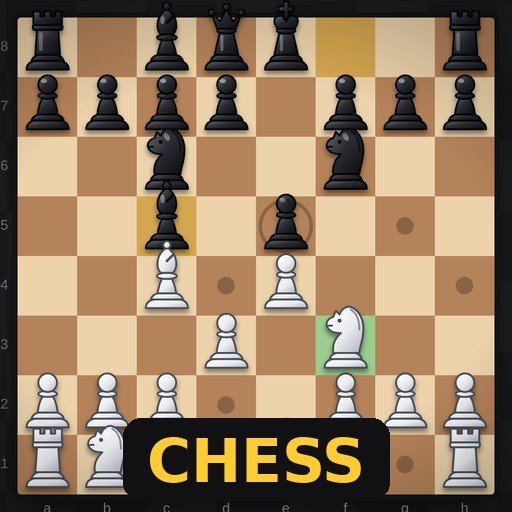 ChessChess is one of the oldest and most loved strategy games in the world, and this version lets you play a full game rig... Play free
Chess needs no introduction, but the browser version makes it easy to practise. You can play the computer on easy, medium or hard, or play a friend on the same screen. When you select a piece, its legal moves are highlighted, which makes it a friendly way to learn the rules.
Skill it trains: planning and spotting threats.
Tips: control the centre early with pawns and knights, develop your knights and bishops before bringing out the queen, castle early to keep your king safe, and before every move ask what your opponent is threatening.
2. Unlock the Bolts: working out the right order
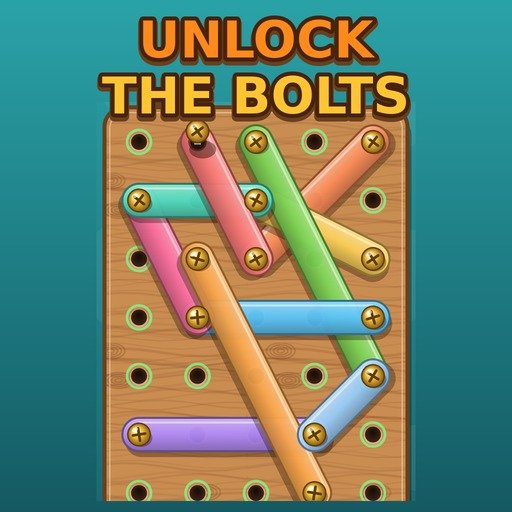 Unlock the BoltsUnlock the Bolts is a calm and clever screw puzzle game. In front of you sits a board with wooden planks held in plac... Play free
Wooden planks are pinned to a board with bolts. Move a bolt into an empty hole, and when a plank loses its last bolt it drops away. The challenge is that planks overlap, so a bolt you need may be hidden underneath another plank.
Skill it trains: sequencing, or working out what has to happen first.
Tips: start with the planks on top of the pile, check that the hole you move a bolt into will not be needed soon, and watch where a plank swings when it is hanging from a single bolt.
3. Neon Bot Maze: route planning under pressure
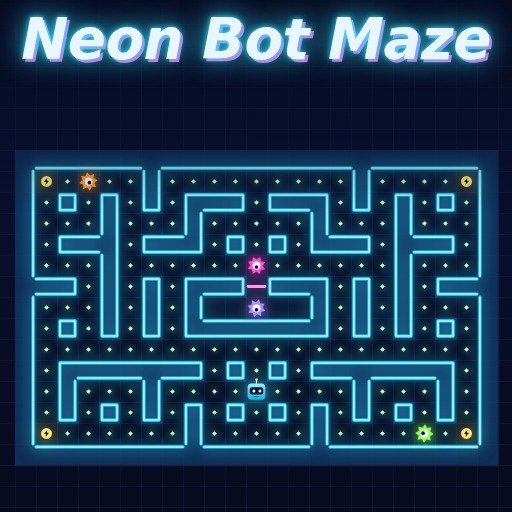 Neon Bot MazeNeon Bot Maze is a quick arcade maze game where you control a small robot trapped inside a glowing neon labyrinth. Yo... Play free
Guide a small robot around a glowing maze, collecting every energy chip while bugs roam the corridors. Power cells turn the tables for a short time, letting you chase the bugs for bonus points. Each stage builds a new maze, so you cannot simply memorise a route.
Skill it trains: route planning and risk management.
Tips: clear one area at a time instead of zig-zagging, save power cells for when bugs are close, and check around corners before you turn.
4. Core Ball: pure timing and focus
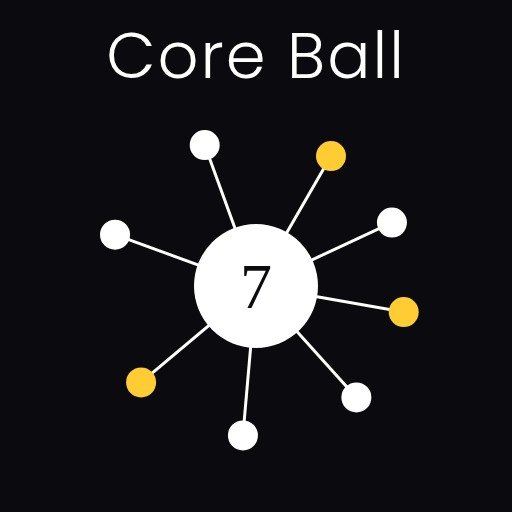 Core BallCore Ball is a minimal timing game that is easy to start and surprisingly hard to master. A large core spins in the m... Play free
A core spins in the middle of the screen and every tap fires a ball to stick to it. Place every ball without two of them touching. As the gaps shrink, the core may speed up, slow down or change direction.
Skill it trains: timing, rhythm and concentration.
Tips: wait for the widest gap rather than tapping on a fixed rhythm, pause for a moment whenever the direction changes, and use the instant restart to learn the pattern of each level.
5. Robo Rope: Battery Drop: predicting physics
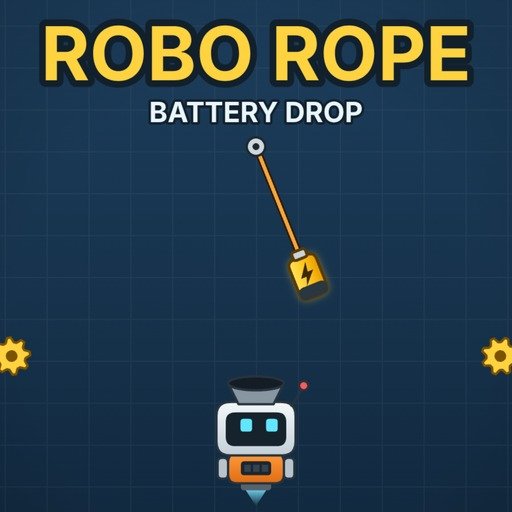 Robo Rope: Battery DropRobo Rope: Battery Drop is a charming physics puzzle game about a hungry little robot that is running low on power. T... Play free
A battery hangs from one or more ropes, and a little robot below needs it. Swipe across a rope to cut it, and the battery swings on whatever is still holding it. When you cut decides where it flies. Later levels add fans, bounce pads and magnets.
Skill it trains: cause and effect, and predicting how objects will move.
Tips: watch one full swing before cutting anything, cut at the bottom of a swing for the fastest sideways throw, and land the battery first before going back for all three golden gears.
More free games that make you think
Once you have tried the five games above, these are good next steps. Each one leans on a slightly different skill.
Spiral Tower Drop: patience and timing
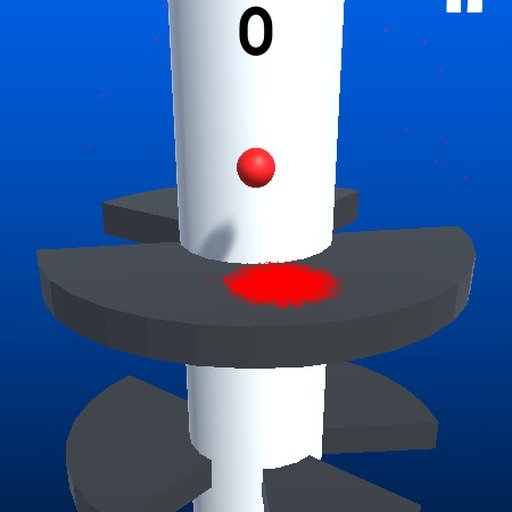 Spiral Tower DropSpiral Tower Drop is a simple and addictive 3D arcade game about a bouncing ball and a tall spinning tower. The ball ... Play free
A ball bounces down a tall tower made of spinning platforms. You rotate the tower so the ball falls through the gaps, while avoiding the danger sections. It looks like a pure reflex game, but the best players slow down and wait for the right gap instead of spinning frantically. It is a lesson in patience: rushing is the fastest way to lose.
Tic-tac-toe: thinking about your opponent
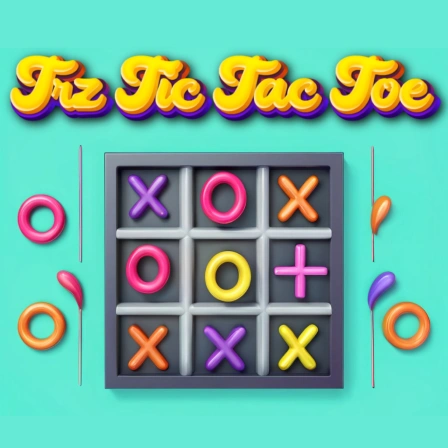 Trz Tic Tac ToeTrz Tic Tac Toe is a fresh take on the classic game of noughts and crosses. You and an opponent take turns placing yo... Play free
Tic-tac-toe is simple enough for young children, but it teaches a big idea: good players think about their opponent's next move as well as their own. Two habits make you very hard to beat. Take the centre square when you can, because it is part of four possible lines. And look for a fork, a move that creates two ways to win at once, so your opponent can only block one of them. Played well by both sides, tic-tac-toe always ends in a draw, which makes spotting your opponent's mistakes the real challenge.
Bakery Match: spotting patterns
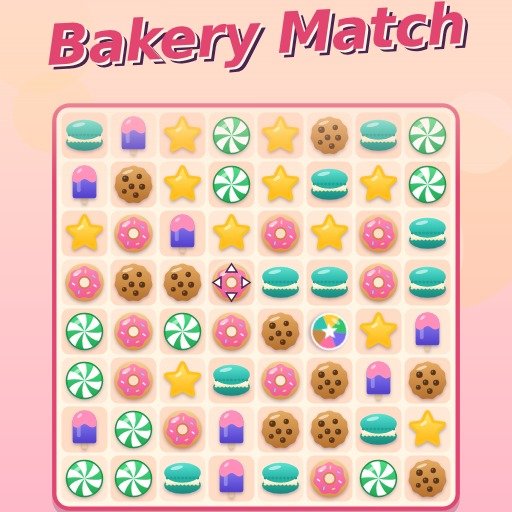 Bakery MatchBakery Match is a sweet match-3 puzzle game filled with tasty bakery treats. Swap pastries around the board, line up ... Play free
Matching puzzles train your eyes to scan quickly for patterns. A good tip for any match game is to look at the bottom of the board first: matches made low down shift more pieces, which often creates free bonus matches above.
Wheely and Scribble Climber: creative problem solving
Physics puzzles like Wheely and Scribble Climber ask you to understand how objects in a level affect each other. There is usually one clever idea per level, and the satisfaction comes from spotting it. If you are stuck, try interacting with every object on screen once and watching what happens.
Why short thinking games feel so satisfying
There is a reason a quick puzzle can feel more rewarding than a long game. Each level gives you a small, clear problem, a moment of confusion, and then the "aha" of finding the answer. That cycle of challenge and success is what psychologists call a state of flow when it is perfectly balanced: hard enough to hold your attention, but not so hard that you give up.
Good puzzle games manage that balance by introducing one new idea at a time. Early levels teach a rule, middle levels combine it with others, and later levels ask you to use it in a surprising way. If you ever feel completely stuck, it often means you have missed one of the rules the game taught earlier, so it is worth replaying a previous level to look for it.
What makes a good thinking game?
Not every puzzle is equally good for your brain. The most rewarding thinking games share a few qualities, and it is worth looking for them whatever you play:
- Clear feedback: you can see exactly why an attempt failed, so you learn something every time.
- Rising challenge: early levels teach the idea, later ones force you to use it in new ways.
- More than one way to win: games like chess and physics puzzles reward creativity, not just memorising a single answer.
- No time pressure, or time pressure you can control: planning games are best when you can stop and think; timing games are best in short bursts.
All the games on this list meet at least three of these, which is why they stay interesting after the first few minutes.
How to get better at any puzzle game
- Pause before the first move. Look at the whole level and form a plan, even a rough one.
- Work backwards. Ask what the final move must be, then what has to happen just before it.
- Change one thing at a time. If a plan fails, keep the parts that worked and change only the step that went wrong.
- Take a break when stuck. Your brain keeps working on a problem in the background, and the answer often appears after a short rest.
Do brain games really make you smarter?
This is a fair question, and the honest answer is: it depends what you mean by smarter. Research on so-called brain training has produced a fairly clear picture over the last decade.
- You definitely get better at the games you practise. Play chess every day and your chess will improve; play a timing game and your timing in that game will sharpen.
- The benefits do not automatically spread to everything else. In 2014, a large group of scientists published a statement warning that there was little evidence that brain-training games improve general intelligence or everyday memory. In 2016, the makers of the Lumosity app agreed to pay a US$2 million settlement to the US Federal Trade Commission over advertising claims that the FTC said were not backed by evidence.
- Thinking games are still good for you. They can be a relaxing break, a way to practise focus, and a fun way to learn strategy. Activities that combine thinking, learning new things, physical exercise, sleep and time with other people are what researchers generally recommend for a healthy brain.
So enjoy these games for what they are: satisfying puzzles that reward planning and focus. Just be sceptical of any app or website that promises to raise your IQ.
A simple weekly brain-game routine
If you like structure, this plan mixes different skills across the week in about ten minutes a day:
| Day | Game | Focus |
|---|---|---|
| Monday | Chess | One game against the computer on a level that challenges you |
| Tuesday | Core Ball | Three attempts at your hardest level, then stop |
| Wednesday | Unlock the Bolts | Plan the full order before moving the first bolt |
| Thursday | Neon Bot Maze | Clear the maze area by area |
| Friday | Robo Rope: Battery Drop | Aim for all three gears on one level |
| Weekend | Your favourite | Play with a friend or family member and compare scores |
Play together
Thinking games are even better with company. Chess and tic-tac-toe are natural two-player games on one screen, and puzzle games make a good shared challenge: one person controls, the other suggests moves, and you swap on each level. Comparing scores on timing games such as Core Ball turns a solo game into a friendly competition, and explaining your plan to someone else is one of the best ways to improve your own thinking.
Brain games for different ages
- Younger children: tic-tac-toe, simple matching puzzles and animal jigsaws are a gentle introduction to planning and patterns.
- Older children and teens: chess, physics puzzles and maze games add strategy and cause-and-effect thinking.
- Adults: any of the games above make a good five-minute break from work or study. Timing games such as Core Ball are especially good at clearing your head.
Track your progress
A simple way to stay motivated is to keep a note of your results: your best time in Core Ball, the chess difficulty you can beat, or how many gears you collected in Robo Rope. Looking back after a few weeks shows real improvement, which is far more encouraging than any promise about brain power. Just remember to compare yourself with your own past results, not with anyone else's.
How to get the most out of brain games
- Play little and often. Ten focused minutes are more useful than an hour of tired clicking.
- Mix the skills. Alternate a planning game such as chess with a timing game such as Core Ball.
- Learn from failures. In all five games, a failed attempt shows you exactly what to change next time.
Find more in our Puzzle and Board Games categories.